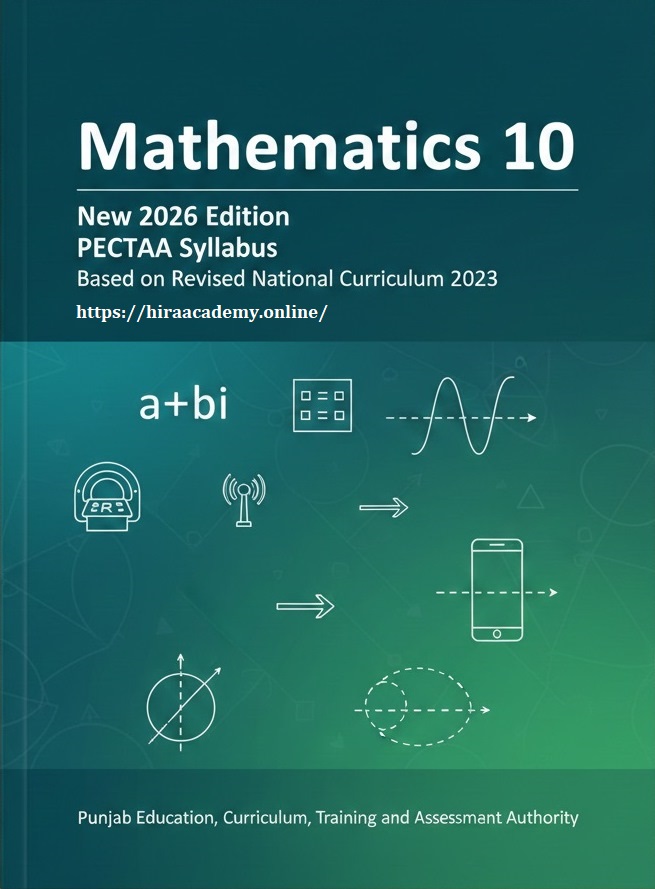
Chapter 1 Topics – Complex Numbers
Click on any topic to expand and view its exercises. Each section includes step-by-step solutions and real-world applications.
1.1 – Introduction to Complex Numbers
Definition, imaginary unit, real and imaginary parts
This section introduces the imaginary unit \(i\), where \(i^2 = -1\), and defines a complex number as \(a + bi\). You'll learn to identify the real and imaginary parts of a complex number and understand why this extension to the real number system is necessary for solving equations like \(x^2 + 1 = 0\).
Basics & simplification
1.2 – Operations on Complex Numbers
Addition, subtraction, multiplication, division
This section covers the four basic operations on complex numbers, including how to rationalize a complex denominator using the conjugate during division. These operations follow the same algebraic rules as real numbers, with the key addition that \(i^2\) is always replaced with \(-1\).
Operations & inverses
1.3 – Conjugate, Modulus & Argand Diagram
Conjugates, modulus, graphical representation
This section covers the conjugate and modulus of a complex number, and introduces the Argand diagram — a way of plotting complex numbers as points on a two-dimensional plane, with the real part on the horizontal axis and the imaginary part on the vertical axis.
Modulus, conjugate & Argand
1.4 – Applications of Complex Numbers
Electrical engineering, signal processing, real-world problems
This section applies complex numbers to real-world problems, particularly in electrical engineering, where they are used to represent alternating current circuits, and in signal processing, where they simplify wave calculations.
Applications & word problems
Review Exercise 1
Complete revision and mixed practice problems
The review exercise mixes questions from all four sections of Chapter 1, giving you a chance to test whether you can move between topics without a hint about which method applies — a useful checkpoint before exams.
Complete Revision & Practice
Complex Numbers – What's Inside This Chapter
Chapter 1 – Complex Numbers is a new addition to Class 10 Mathematics under the Revised National Curriculum 2023. It extends the real number system to solve equations with no real solutions, and is foundational for electrical engineering and signal processing.
Prepared by Muhammad Tayyab, Govt Christian High School Daska, this chapter's notes cover all four exercises plus the review exercise, with step-by-step solutions and real-world applications throughout.
✅ What This Chapter Covers
- ✓Definition of a complex number and the imaginary unit
- ✓Addition, subtraction, multiplication, and division
- ✓Conjugates, modulus, and Argand diagrams
- ✓Applications in electrical engineering and signal processing
- ✓Step-by-step solved exercises for all four sections
- ✓A complete review exercise for revision
🌐 Why Complex Numbers Matter
Complex numbers let engineers represent alternating current circuits and analyze signal waveforms using algebra instead of complicated trigonometric equations.
Mastering this chapter builds a foundation you'll rely on again in F.Sc. Mathematics and Physics, especially in AC circuit analysis and wave theory.
Related Chapter 1 Resources
📖 Definitions
Key terms and theorems for Chapter 1.
🧮 Formula Sheet
Complex number formulas at a glance.
✅ Chapter MCQs
Practice multiple choice questions.
🎯 Guess Paper
Important questions predicted for exams.
🗂️ Past Papers
Solved previous board papers.
📔 Math Key Book
Full solution guide for all chapters.